What Is Boom Bap: The Kick, the Snare and New York Hip Hop
What is boom bap? Say the name out loud and you have already played it: boom is the kick, bap is the snare. Below, the groove step by step, the machines that made it and where it went next.
- Updated Nov 21, 2026
- 6 min read
What is boom bap? A kick called boom, a snare called bap
Boom bap is the drum sound and production style of East Coast hip hop from the late 1980s through the 1990s. The name imitates the kick (boom) and the snare (bap). It usually runs at 85 to 95 BPM over a soul or jazz loop sampled from a record.
The phrase was rap slang before it was a genre tag. KRS-One put it on an album cover in 1993, Return of the Boom Bap, and from then on it meant a particular sound: hard drums, a dusty loop and a rapper right on top.
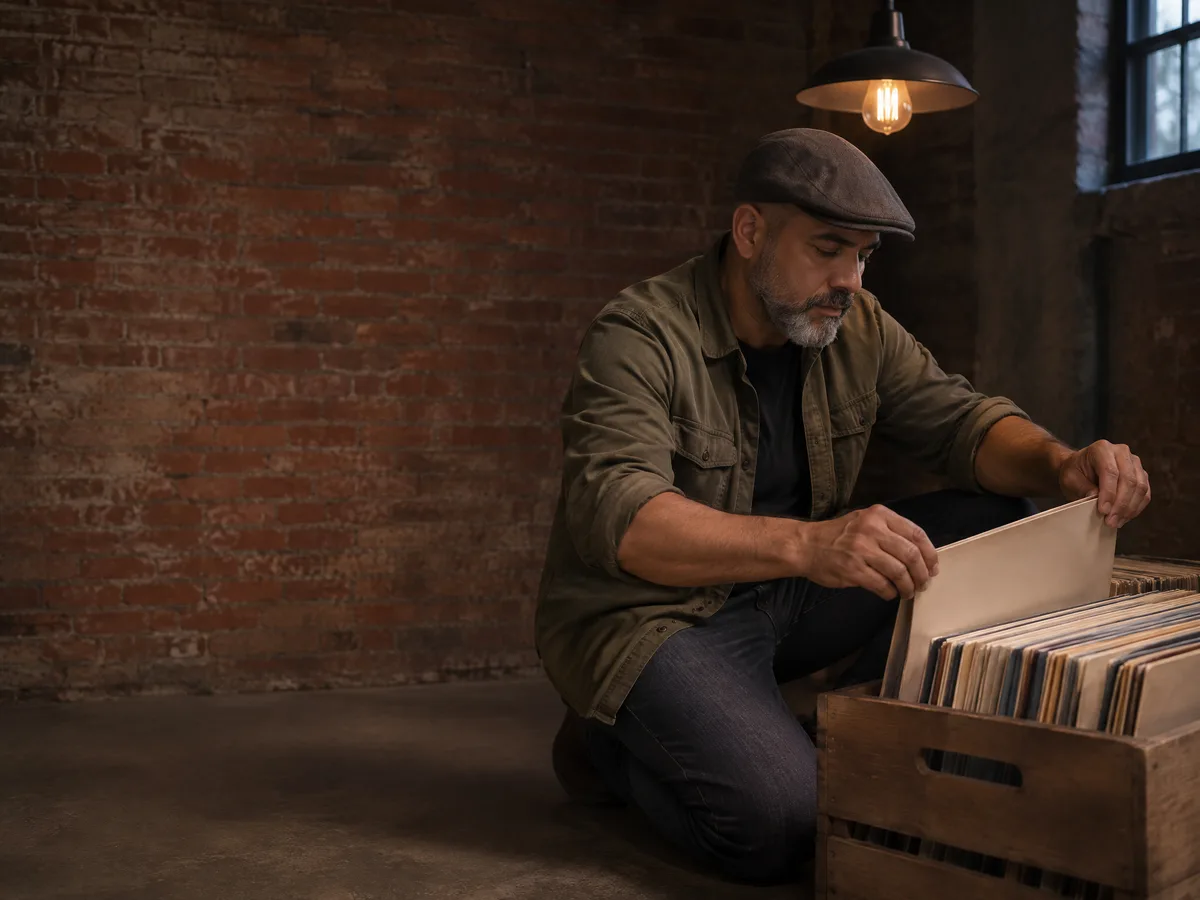
Producers built that sound by digging. They pulled a few bars from an old record, chopped the drums out of another, and lined them up on a sampler, which is why the crate of vinyl is part of the boom bap picture.
What is a boom bap beat? Two drums, a swing and a loop
A boom bap beat is less busy than people expect. Five things on the grid carry it, all taken from the Boom bap preset at 90 BPM.
On the records, those drums were rarely programmed from scratch. Producers lifted a kick from one break and a snare from another, then played them back in this kind of pattern, so every hit carried a little of the room it was recorded in.
- 01
The boom: kick on one, then late
The kick hits step 1, then the and of beat 2 and the and of beat 3. Those late kicks are what make heads nod.
90 BPMKick - 02
The bap: snare on two and four
A hard snare on beats 2 and 4, steps 5 and 13, and nothing else. In boom bap the snare is the loudest thing in the mix.
90 BPMKick Snare - 03
Swung eighth note hats
Plain eighth notes, pushed late by the swing control. Without the swing the same pattern sounds like a metronome.
90 BPMClosed hat - 04
Ghost notes on rim and snare
A quiet rim just before beat 3 and a soft snare before the bar repeats. In the beat maker, Shift-click a step to place a ghost note like these.
90 BPMSnare Rim - 05
A dull, dusty kit
The Dusty kit is low-passed so the drums sound like they came off a record. Play the whole preset to hear all five together.
90 BPMKick Snare Closed hat Rim
- Origin
- New York and the US East Coast
- Peak years
- About 1987 to 1997
- BPM
- 85 to 95
- Signature sounds
- Sampled drums, swing, a vinyl loop
- Related styles
- Lo-fi hip hop, jazz rap; trap for contrast
Boom bap hip hop in the New York golden era, and the samplers behind it
Boom bap hip hop is tied to two machines. A sampler let one person record a drum hit or a few bars from a record, then replay them on pads in any order, so the beat could be built from old soul and jazz.
- 1987E-mu SP-1200A sampler with a few seconds of memory and a gritty 12-bit sound.
- 1988Akai MPC60Pads, a sequencer and swing in one box.
- 1990sThe producersDJ Premier, Pete Rock, Marley Marl and Large Professor define the sound.
- 1993The nameKRS-One releases Return of the Boom Bap.
- 2010sThe returnGriselda and The Alchemist bring the sound back.
The short sample time on those machines shaped the style: loops stayed short, drums were often sped up to save memory and slowed back down, which added grit. You can hear more variations in these boom bap drum patterns.
The swing came from the machines too. The MPC could nudge every second sixteenth late, and that slightly drunk timing is now as much a part of the sound as the snare itself. Producers such as Pete Rock also layered horn stabs and filtered bass lines from the same records, so drums and loop shared one dusty tone.
Boom bap, trap and lo-fi side by side
| Boom bap | Trap | |
|---|---|---|
| BPM | 85 to 95 | 130 to 150, felt in half time |
| Kick | Beat 1, then late kicks on the ands | Sparse, locked to the 808 |
| Hats | Swung eighth notes | Straight sixteenths with fast rolls |
| Bass | A sampled bass line or none | Long 808 sub bass |
| Era | Late 1980s and 1990s | 2000s Atlanta onward |
Lo-fi hip hop sits between the two in feel but slower, about 70 to 90 BPM, with softer drums and even more swing. Try each side for yourself: make lazy swung lo-fi drums, or open the trap beat maker and hear how far the hats move.
Who keeps boom bap alive after 2010
Boom bap never left, it went underground. Buffalo's Griselda crew and producers like The Alchemist built whole catalogues on raw loops and hard snares in the 2010s, and plenty of new producers still start here.
The appeal is practical as much as nostalgic. Two drums, a swing and a loop leave lots of room for a voice, so rappers who care about their words often pick a boom bap beat over a crowded one.
The groove also feeds other styles. Most hip hop beat maker presets that are not trap still borrow its kick and snare placement.

The Boom bap preset at 90 BPM on the Dusty kit. Open it here or go to the page built to make swung 90s hip hop drums.
Open in the beat maker| Kick | ||||||||||||||||
|---|---|---|---|---|---|---|---|---|---|---|---|---|---|---|---|---|
| Snare | ||||||||||||||||
| Closed hat | ||||||||||||||||
| Rim |
Need the sampled loop as well? MakeBeat cannot sample records, but the AI beat generator writes a full instrumental from a description, with an account and credits.
What is boom bap? Quick answers
What does boom bap mean?
It is the sound of the two main drums said out loud: boom for the kick, bap for the snare. The phrase became the name for sample based East Coast hip hop of the late 1980s and 1990s.
What BPM is boom bap?
Most boom bap sits between 85 and 95 BPM. The MakeBeat preset starts at 90 with swing on the hats.
Is boom bap the same as old school hip hop?
Not quite. Old school usually means the late 1970s and early 1980s, with drum machines and party breaks; boom bap is the sampler sound that came after, from the late 1980s on.
Do people still make boom bap?
Yes. Griselda, The Alchemist and many underground producers kept it going through the 2010s, and lo-fi hip hop is a softer cousin of the same groove.
Can you make boom bap without samples?
The drums, yes: the Dusty kit and swing in MakeBeat get close to that sound. Sampling a record or a loop is not possible here, so that part needs your own DAW.