What Is a Metronome and How Does It Keep Perfect Time
What is a metronome? It is a device that sounds an even click, or flashes a light, at a tempo you set in beats per minute, so a player can hear exactly where each beat falls.
- Updated Nov 22, 2026
- 7 min read
What is a metronome, and what does BPM have to do with it
A metronome is a timekeeper for musicians. It makes an even click or flash at a chosen number of beats per minute (BPM), so the player can lock to a steady speed. Johann Maelzel patented the wind-up version in 1815, and the idea has barely changed since.

The setting on any metronome is a single number: how many clicks arrive in one minute. Set 60 and you get one click a second; set 90 and the clicks come one and a half times as often. Nothing else about the tempo needs to be described, which is why BPM became the common language of teachers, composers and producers.
Each click stands for one beat, the pulse you would tap your foot to. A metronome does not play the music for you or tell you which notes go where. It only marks the grid that the notes should sit on, and the player decides how to fill each gap.
The fastest way to understand that grid is to hear it. The three short bars below use the rim row of the MakeBeat drum machine as a click, one hit per beat, the same way a metronome ticks.
01Sixty beats a minute, a click on every second
Press Play and count along with a clock. Every click lines up with a second, and four clicks make one bar of four beats. This is a slow, comfortable tempo for learning a new piece note by note.
| Rim |
|---|
02Twice the number, twice as many clicks
The grid has not changed, only the number. Now two clicks fit into each second, and the bar is over in two seconds instead of four.
Doubling the BPM halves the time between beats. Most pop, house and rock songs sit somewhere between these two examples, and you can check a song you know by counting the tempo of any track against a stopwatch.
| Rim |
|---|
03Beat one louder than the rest
Most metronomes mark the first beat of each bar so you never lose your place. Here beat one plays at full level and beats two to four are ghost notes at about half volume, so the bar sounds like ONE two three four.
A dedicated metronome also raises the pitch of that first click. A plain metronome gives one click per beat and nothing in between; to hear eighths or sixteenths, open this bar and make a beat in your browser by filling the steps between the clicks.
| Rim |
|---|
Metronome meaning in a score and in a studio
The metronome meaning shifts a little depending on who says it. To a pianist reading sheet music, it is the box on the piano and the number printed above the first bar. To a drummer or producer, it usually means the click in the headphones that the whole recording follows.
In a score, the metronome number turns a vague word like Allegro into a speed you can measure. Before the device existed, composers could only describe a tempo in words, and two orchestras might play the same piece at noticeably different speeds.
In a studio, the click is called a click track. Every musician hears it while recording, so separate takes line up and can be edited together. The same pulse drives the grid in beat software, where a drum pattern is often a short pattern that repeats bar after bar at the project tempo.
Both senses share one definition: the metronome is the reference tempo that everyone agrees to follow. Whether it ticks from a wooden box or from a laptop, it answers the same question about how fast the music should go.
How a mechanical metronome works, and how a digital one does
The two kinds reach the same result by very different routes. A wind-up model measures time with a swinging rod; a digital one counts the vibrations of a tiny crystal or the samples of an audio clock.
- 1Spring. Winding the key tightens a spring that powers the clockwork.
- 2Escapement. A toothed wheel releases one tooth per swing, gives the rod a small push and makes the tick.
- 3Rod and weights. A fixed weight sits below the pivot and a sliding weight rides on the rod above it.
- 4Scale. Slide the weight up and the swing slows; slide it down and it speeds up. Read the BPM at the weight.
- Clock. A quartz crystal or the audio clock of a phone or computer ticks thousands of times a second.
- Counter. The circuit or app counts those ticks and divides them to the gap between beats: 60 divided by the BPM, in seconds.
- Click. At each gap it plays a short sound or lights a dot; beat one of the bar gets a different sound.
120 BPM = 60 / 120 = 0.5 s between clicks
The double pendulum was worked out around 1814 by Dietrich Winkel, an Amsterdam instrument maker. Maelzel added a scale of tempo numbers and took out the patent in 1815, and a Dutch commission later credited Winkel with the original idea.
Digital models arrived much later and added things a pendulum cannot do, such as odd numbers of beats per bar, silent visual modes and setting the speed by tapping. A tap tempo counter works that way: you tap along with a song and it turns the gaps between your taps into BPM.
Metronome markings: M.M., note values and Italian tempo words
Metronome markings sit above the first bar of a piece. They name a note value and a number, and older scores add the letters M.M., short for Maelzel's Metronome.
- M.M. ♩ = 60
- Sixty quarter notes a minute, one per second.
- ♩ = 120
- The modern short form: 120 quarter notes a minute.
- ♩. = 72
- In 6/8, the beat is a dotted quarter: 72 of them a minute.
| Tempo word | Rough BPM | Meaning |
|---|---|---|
| Largo | 40 to 60 | broad and very slow |
| Adagio | 66 to 76 | slow, at ease |
| Andante | 76 to 108 | at a walking pace |
| Moderato | 108 to 120 | moderate |
| Allegro | 120 to 156 | quick and lively |
| Presto | 168 to 200 | very fast |
The BPM ranges for the Italian words are rough guides, and sources disagree by ten or more beats at the edges. When a score gives both a word and a number, the number is the instruction and the word tells you the character.
Beethoven was one of the first major composers to print metronome numbers, from 1817 on. Some of his markings are so fast that performers still argue about whether his device was accurate.
What a metronome is used for, beyond practice
Practice is the obvious answer, but a metronome earns its place in several other jobs. These six cover most of what players actually do with one.
- Slow down a hard passage. Play it cleanly at a low BPM, then raise the number a few clicks at a time.
- Record to a click track. Separate takes stay in time with each other and can be cut together later.
- Measure a recording's speed. Nudge the click against the track until the two stop drifting apart.
- Learn a time signature. The accent on beat one makes three, five or seven beats per bar easy to feel.
- Warm up. Scales and rudiments against a steady click wake up the hands and the ears together.
- Count in a band. One player listens to the click and counts the group in at the agreed tempo.
For step by step routines, such as starting below your comfortable speed or leaving the click off for a bar, read the drills for playing in time with a click. This page covers what a metronome is; that one covers how to practise with it.
Try the online metronome with an accent: 40 to 240 BPM, 2 to 7 beats per bar, a higher click on beat one and the Space bar to start and stop. It plays one click per beat, with no subdivisions.
Open the metronome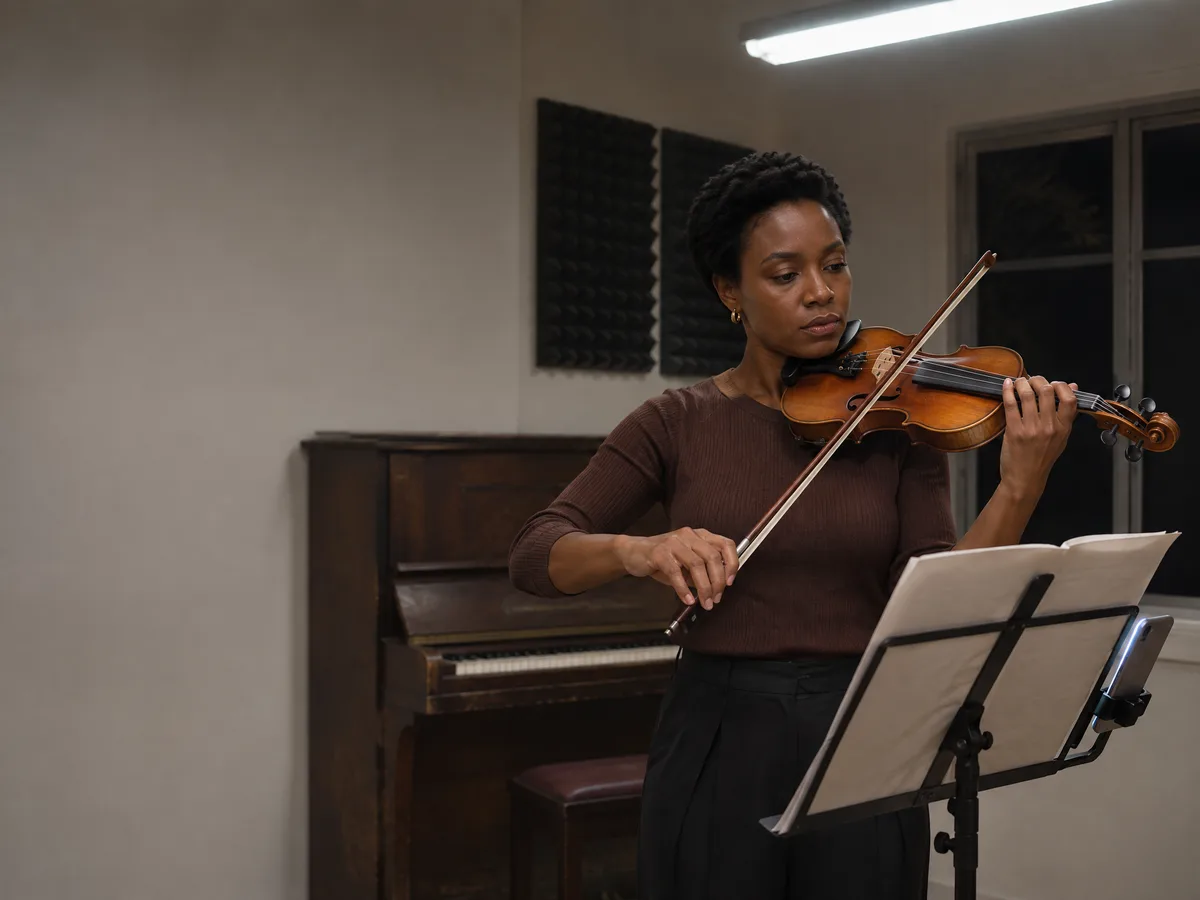
Strip away the wood and the screens and the answer to what is a metronome stays small: a steady, adjustable beat to measure your playing against, whether it swings on a piano lid or clicks from a phone on a music stand.
What is a metronome? Five short answers
Where does the word metronome come from?
It joins two Greek words, metron (measure) and nomos (rule or law), so it reads roughly as "the rule of measure". The name arrived with the clockwork device in the early 1800s.
What are the slowest and fastest metronome settings?
Many wind-up models run from about 40 to 208 BPM, which covers almost all written music. Digital ones usually go further; the MakeBeat metronome runs from 40 to 240 BPM.
Is 60 BPM one beat per second?
Yes. Sixty beats in sixty seconds puts each click exactly one second apart, which is why 60 is the easiest tempo to check against a clock. At 120 BPM the gap halves to half a second.
What does M.M. mean on a metronome marking?
M.M. stands for Maelzel's Metronome, after the maker who patented the device in 1815. "M.M. ♩ = 96" asks for 96 quarter notes per minute.
Do I have to use a metronome to play well?
No, plenty of fine players rarely touch one. It is a measuring tool: use it to find where your timing drifts, then practise until you hold the tempo without it.