How to Make Rap Beats with a Pocket for the Vocal
Learning how to make rap beats is mostly learning what to leave out. A rap beat is finished when a voice fits on top of it, so this guide builds one around the space the rapper needs, with a playable grid for every step.
- Updated Nov 21, 2026
- 9 min read
How to make rap beats: choose a lane first, boom bap at 85 to 95 BPM with the snare on 2 and 4, or trap at 130 to 150 BPM in half time with the snare on 3. Lock the 808 to the kick, use the hats for movement, add layers for the hook and strip them back for the verse.
How to make rap beats: choose the lane before the sounds
Rap beats split into two big families, and the choice decides your tempo, your snare and your kit before you pick a single sound. Deciding first saves an hour of scrolling through kicks.
Boom bap is the swung, dusty sound of 90s hip hop: if that is your lane, start where you can make swung 90s hip hop drums at 90 BPM. Trap is faster on paper, half time in feel, with rolling hats and a long 808; there you program half-time trap drums at 140.
The rest of this page follows the trap lane, because it has more moving parts. The same ideas, a pocket for the voice and fewer parts in the verse, work at 90 BPM too.
Rap beat pockets: snare on 2 and 4, or on 3
Rappers phrase around the snare. It is the landmark they aim their strongest syllables at, and the gap before it is where they breathe.
Put the snare on 2 and 4 and the bar has two landmarks, close together; the flow tends to be busy and conversational. Put it on 3 only and there is one landmark per bar, with long open space for drawn out lines.
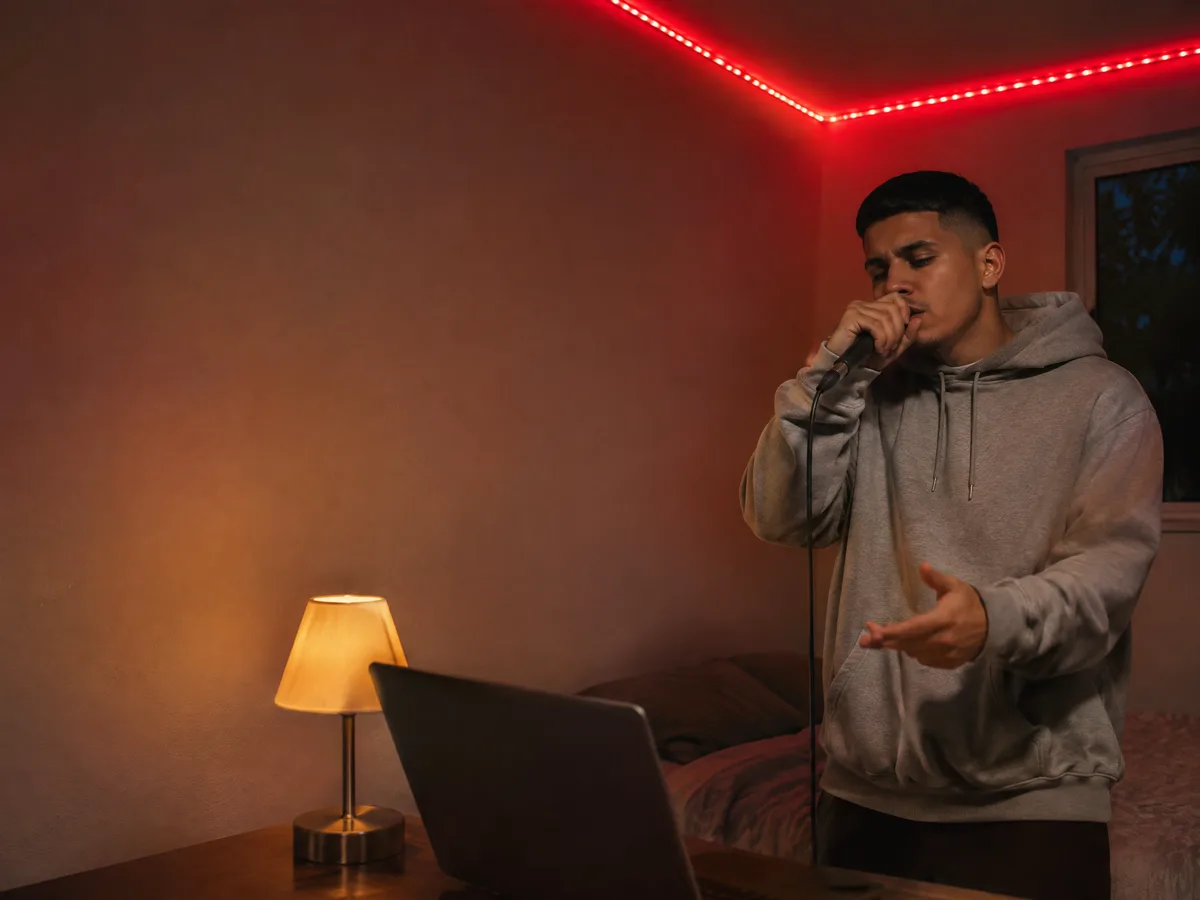
| Kick | ||||||||||||||||
|---|---|---|---|---|---|---|---|---|---|---|---|---|---|---|---|---|
| Snare | ||||||||||||||||
| Closed hat | ||||||||||||||||
| Rim |
| Kick | ||||||||||||||||
|---|---|---|---|---|---|---|---|---|---|---|---|---|---|---|---|---|
| Snare | ||||||||||||||||
| Closed hat | ||||||||||||||||
| Open hat | ||||||||||||||||
| 808 bass |
How to make a hip hop beat at 140 that feels like 70
Half time means the tempo says 140 but the snare only lands once a bar, so your head nods at 70. Fast hats on top, slow snare underneath: that contrast is the whole trap sound.
01Lay the half time skeleton
Set BPM to 140 and Kit to 808. Kick on steps 1, 8 and 11, one snare on step 9.
Loop just these two rows. The bar should already lumber along, heavy and slow, with most of it left open for a voice.
| Kick | ||||||||||||||||
|---|---|---|---|---|---|---|---|---|---|---|---|---|---|---|---|---|
| Snare |
02Lock the 808 to the kick
Put the 808 bass on exactly the kick steps. In a rap beat the 808 is often the most melodic part, and lining it up with the kick keeps the low end tight.
The 808 row in the drum machine plays one note, with no slides. Sliding, melodic 808 lines are written in a DAW after Download MIDI.
| Kick | ||||||||||||||||
|---|---|---|---|---|---|---|---|---|---|---|---|---|---|---|---|---|
| Snare | ||||||||||||||||
| 808 bass |
03Roll the hats
Fill the closed hats on most sixteenths, leaving gaps on steps 6 and 14, and put open hats in those gaps. This is the Trap groove the machine loads from its style row.
| Kick | ||||||||||||||||
|---|---|---|---|---|---|---|---|---|---|---|---|---|---|---|---|---|
| Snare | ||||||||||||||||
| Closed hat | ||||||||||||||||
| Open hat | ||||||||||||||||
| 808 bass |
04Write a busier B for the hook
Copy A to B. In B, fill the closed hats on all sixteen steps and add a kick and an 808 on step 15, which kicks the bar back to the top.
The hook can carry more drums because the rapper is repeating a short phrase, not telling a story.
| Kick | ||||||||||||||||
|---|---|---|---|---|---|---|---|---|---|---|---|---|---|---|---|---|
| Snare | ||||||||||||||||
| Closed hat | ||||||||||||||||
| Open hat | ||||||||||||||||
| 808 bass |
05Drop out for the punchline
Clear the kick and 808 from steps 13 to 16. The low end disappears for the last beat, and a line that lands there hits twice as hard.
Use it once every four or eight bars, never every bar, or the trick turns into the pattern.
| Kick | ||||||||||||||||
|---|---|---|---|---|---|---|---|---|---|---|---|---|---|---|---|---|
| Snare | ||||||||||||||||
| Closed hat | ||||||||||||||||
| Open hat | ||||||||||||||||
| 808 bass |
- "It feels crowded"Mute the cowbell and percussion rows in the verse and thin the hats to eighth notes.
- "I cannot hear myself over the bass"Lower the 808 volume slider and keep it off the snare step.
- "It is too fast to write to"Halve the feel instead of the tempo: move the snare from 2 and 4 to 3.
- "The 16 bars all sound the same"Change one detail every four bars: a dropped kick, an open hat, a hat roll.
- "Where is the hook?"Make the hook bar busier than the verse bar, and switch between them at the hook.
The verse bar (A) and hook bar (B) from the steps above. Open them, set Loop to A then B, and change anything.
Open the rap beat| Kick | ||||||||||||||||
|---|---|---|---|---|---|---|---|---|---|---|---|---|---|---|---|---|
| Snare | ||||||||||||||||
| Closed hat | ||||||||||||||||
| Open hat | ||||||||||||||||
| 808 bass |
How to make beats for rap verses and hooks
A full rap beat is the two bars above laid out over about three minutes. Verses run 16 bars on the A groove; hooks run 8 bars on B.
- Intro4 bars · AKick and 808 muted
- Hook8 bars · B
- Verse16 bars · AHats only on bar 1
- Hook8 bars · B
- Verse16 bars · ADropout every 8
- Hook8 bars · B
- Outro4 bars · ASnare muted
The drum machine plays two bars, so it is the place to write A and B, not the full song. Download MIDI for each, then copy the clips along a DAW timeline to match the strip.
If you just need a beat to practise over today, the beat maker for rap opens with a groove ready, and the guide to staying on the beat while you rap is written for the person holding the mic.
Rap beat mixing: clearing space so the voice cuts through
A voice lives in the middle of the frequency range, the same place as snares, claps and most melodies. Every part you put there competes with the words.
So keep the middle thin in the verse. Let the kick and 808 own the bottom, the hats own the top, and the snare speak once or twice a bar. Melodic parts go up an octave or drop out while the rapper is talking.
Turn the hats down before you think they need it; on headphones they always seem quieter than they are. If the beat feels empty without the vocal, that is usually a sign it is right.
If you are new to all of this, the general guide on how to make beats covers the basics this page assumes.
Sending your rap beat to a rapper
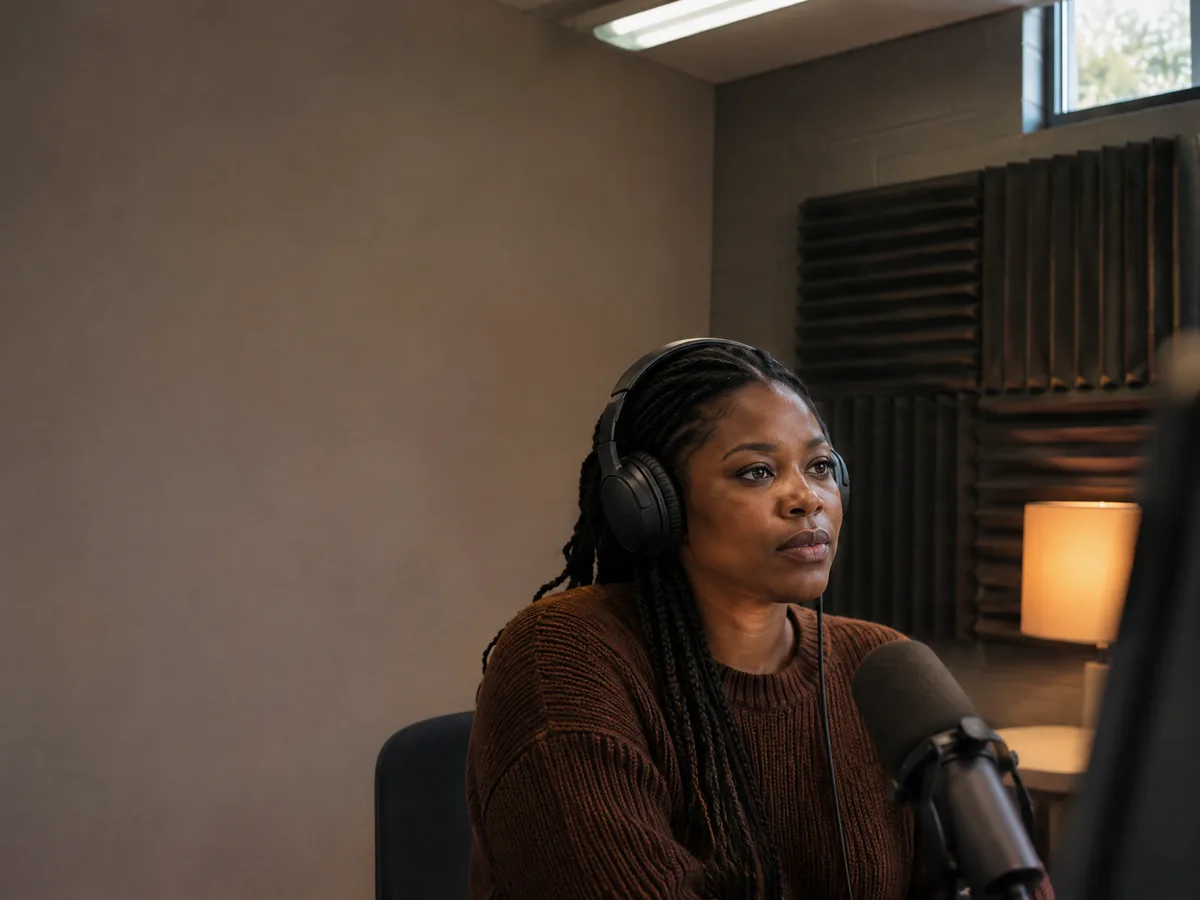
A rapper will open your file on a phone, in a car, or in a studio session at 2 a.m. Make it easy: clear names, the files they expect and a link that still works next month.
Download WAV gives two passes of the loop at 44.1 kHz, 16 bit, and Download MIDI gives the drum notes for anyone who wants to rework them. Copy share link opens the exact beat in a browser, no account needed.
Once you send beats to people you do not know, think about rights; there is a guide on licensing and listing your beats for sale.
Before you hit send
- The file name has the BPM and, if it has one, the key: dark-hook-140bpm-Fmin.wav.
- A WAV for recording, plus an MP3 copy made from it for quick listening.
- The MIDI file, for a producer who wants to change the drums.
- At least 4 bars of intro before the first hook, so the rapper can count in.
- No bright parts sitting where the voice goes.
- The share link saved next to the files.
Need chords and a melody over your drums? The AI beat generator writes full rap instrumentals from a style and tempo. It needs an account and credits, and it writes its own drums.
Try the AI beat generatorQuestions about how to make rap beats
What do rappers use to make beats?
Most use a DAW with a drum sampler, and many start the drums on a step sequencer or pad controller. The tool matters less than the pocket: kick, snare and space for the voice.
What BPM is a rap beat?
Boom bap usually sits between 85 and 95 BPM. Trap and drill run from about 130 to 150, but with the snare on 3 they feel like half that speed.
How long is a rap beat?
Two and a half to three and a half minutes is common: an intro, two or three 16 bar verses and an 8 bar hook between them.
Can I make a rap beat without samples?
Yes. Drums, an 808 and a simple chord or synth line are enough for many rap beats. Avoiding uncleared samples also makes the beat easier to sell.
Can I sell beats I make?
Yes, if every sound in them is cleared. The drum sounds in the MakeBeat machine are free to use in releases; check the license of anything else you add.
What is the trick to a good type beat?
Study the tempo, drum pattern, 808 style and sounds of one artist or scene, then build your own beat with those traits. Copy the style, never the recording.